

Reflecting on sepsis: bridging the gap between research and clinical care
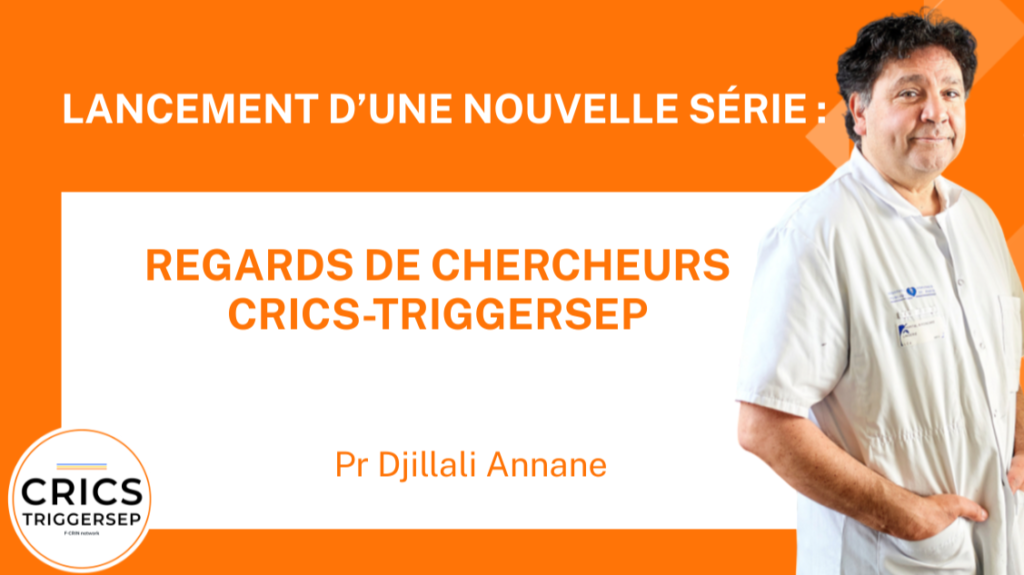
To gain a better understanding of the people who drive research in critical care: that is the aim of this new series. In this first interview, Professor Djillali Annane shares his views on sepsis, clinical research and the power of human connection.
Could you introduce yourself and tell us about your centre?
I am Djillali Annane, Head of the Intensive Care and Resuscitation Department at Raymond-Poincaré Hospital in Garches, which is part of the AP-HP. I also head the IHU Sepsis, accredited in 2023, which is dedicated to preclinical, clinical and translational research into sepsis.
What is your main area of expertise in critical care research?
D.A. : Much of my career has been devoted to research into sepsis. I am interested in this field both at the preclinical level, from a translational research perspective, and at the clinical level. I worked within the joint research unit at the University of Versailles (Inserm) and now within an even more stimulating environment as part of the IHU Sepsis.
Have you developed any other areas of interest over the course of your career?
D.A. : When I started my career, my head of department taught me that you shouldn’t spread yourself too thin. You can’t be good at everything. Yet sepsis is already a very broad field. To claim to be interested in the various aspects of pre-clinical, clinical and societal research into sepsis is ambitious and already fully occupies my research activities.
What drives your day-to-day commitment to critical care research?
D.A. : Firstly, I have never drawn a distinction between research, clinical practice and teaching. For me, these three aspects are interlinked and share a common goal: to improve patient care. So, my main motivation is to improve the quality of care for my patients and for patients in general.
« The network plays, first and foremost, a vital role in bringing people together. Thanks to it, I’ve been able to collaborate with many colleagues whom I probably wouldn’t have met otherwise. »
In your view, which research breakthrough has had the greatest impact on patients?
D.A. : It’s difficult to say. Firstly, the network produces a vast amount of scientific output and conducts numerous studies across various fields of intervention. But it isn’t operating in isolation: other networks are working on the same topics and are also publishing what are known as ‘disruptive’ findings. It is therefore a difficult question to answer. In reality, it is only when several independent teams obtain and confirm the same results that clinical practice changes. That is what science is all about.
How does the CRICS-TRIGGERSEP network contribute in practical terms to your research projects?
D.A. : First and foremost, the network plays a vital role in bringing people together. Thanks to it, I’ve been able to collaborate with many colleagues whom I probably wouldn’t have met otherwise. This effect of breaking down barriers and fostering connections is a real advantage in research, and therefore a genuine added value of the network. Secondly, the network provides a good framework for conducting multicentre clinical trials, particularly when we secure funding. Finally, I really enjoy the scientific retreats organised within the network. These are opportunities for discussion and knowledge-sharing that foster what I would call a form of scientific mentorship.
Further reading: Professor Djillali Annane recently coordinated a study on corticosteroids in sepsis (the RECORDS Trial)
This interview marks the start of a series focusing on researchers within the network, their career paths, their areas of expertise and how they are advancing research in critical care, working closely with patients. If you have any questions or suggestions, please contact us at: crics-triggersep.org/en/contact/